   Horizon Hunters Gathering is an upcoming cooperative live service action game developed by Guerrilla Games and published by Sony Interactive Entertainment.
It is set in the Horizon universe and is scheduled for release on the PlayStation 5 and Windows.
I joined the project during production and assisted with quest and exploration activities.
! Note for this page: As the game is not published yet, my work will be heavily generalized as per signed NDA.
Role
Quest Design Intern
Engine
Decima Engine
Platform
PS5, Microsoft Windows
Project Duration
Sept 2026 – Feb 2027
Role and Contribution
Quest Design – Intern
- Familiarized myself with existing content and ongoing work to get up to speed.
- Researched target games to understand intended player experience and game flow.
- Created concepts and design documents for the features that I was working on.
- Implemented quest parts on the ‘golden path’ and took responsibility for their progress.
- Implemented world exploration features as extra content to develop the Horizon feel of the game.
- Participated in internal playtests to keep the QA flow in motion to collect and forward feedback.
- Kept up communication with other departments, as well as with supervisors in regards to work progress.
Onboarding
Existing Content
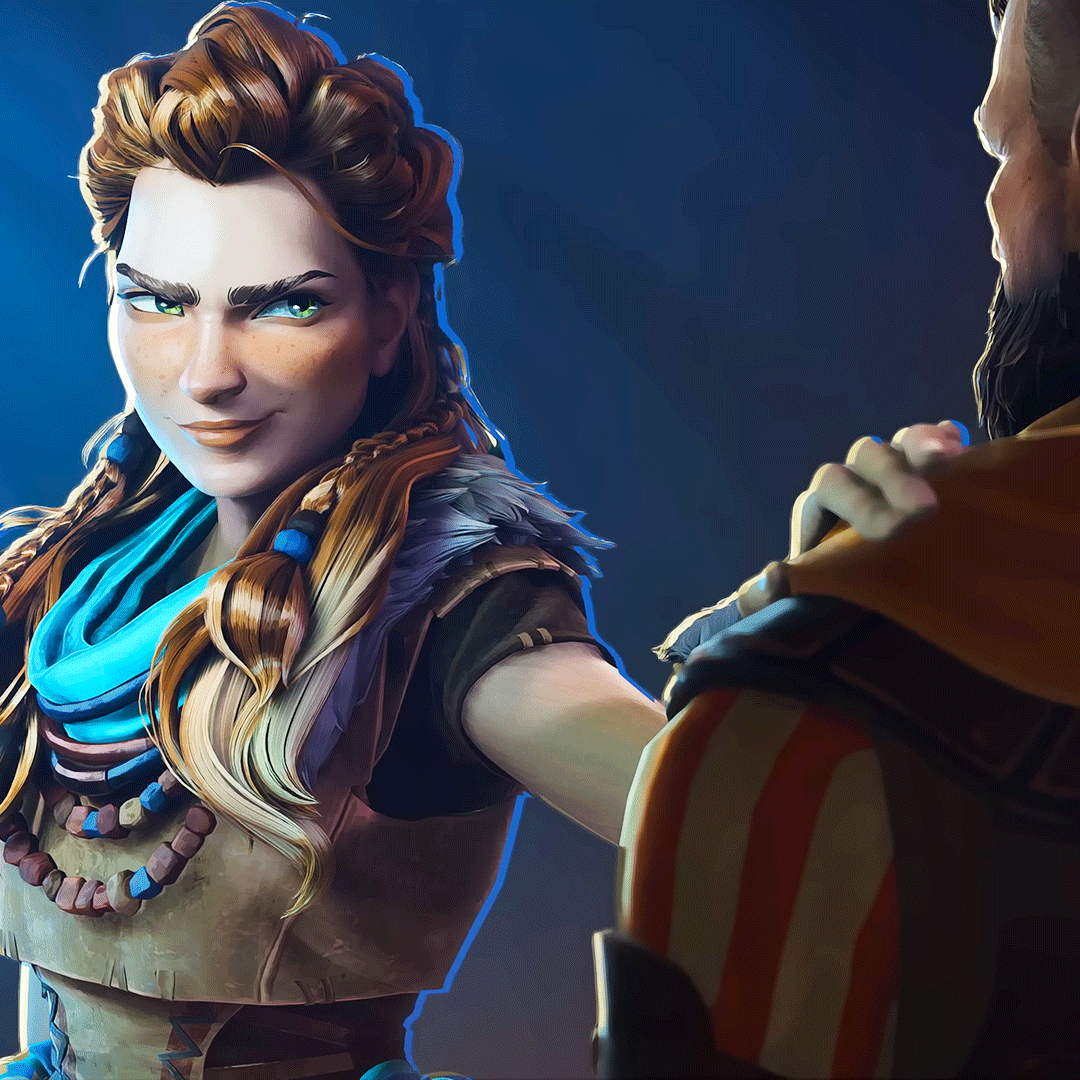
Joining the project during the Production phase meant that I would be working with a pre-established content, game feel and desired player experience.
Some of the first challenges I tackled were:
- Catching up to decisions in the narrative and world department, which my duties were part of.
- Opened Decima Engine as a first-time user and began familiarizing myself by making as many connections to Unreal Engine 5, which I was used to.
- Joined meetings to begin persuading the present of the project and begin assisting with small tasks, and participating in design decisions with fresh eyes.
Target game research
    As a new addition to the team, and with my nature as an intern, it is easy to fall into a "What?" work style: "What can I do?" "What do you want me to do?" "What is going on?"
That's why I was encouraged to research the media that brought about the concept of the game and the decisions. I was encouraged to ask "Why?" and nurture open communication with my seniors.

    Being able to come up with my own conclusions and allowed to feel the intent of the final product with the games that inspired Horizon Hunters Gathering shaped the rest of my internship. From then on I was able to ask "How?" questions. "How can I implement this?" "How can we achieve this for the player?" and "How do we make [quest] fun?"
Quest Design
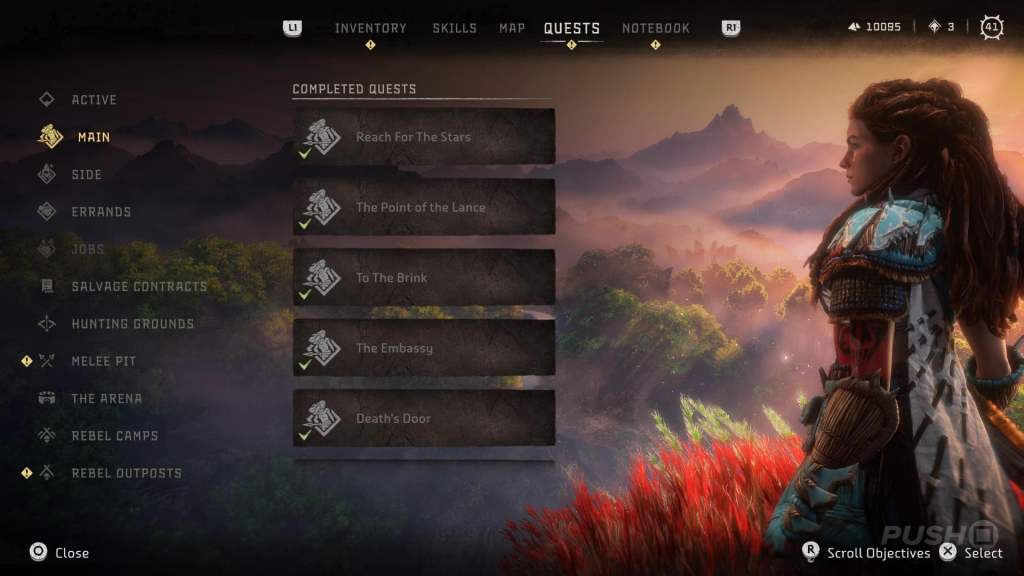
I began my journey by assisting my supervisor in meetings and miscellaneous, light tasks until I was allowed to begin handling heavier tasks.
It didn’t last long at all until I was able and allowed to take responsibility over more critical content, having given the opportunity to work on a ‘golden path’* quest line.
Work Flow
For each piece of content I would implement, first I would check in with my supervisor, lead and producer.
Normally in production, tasks would come from a meeting where a need for a piece of content has been expressed and discussed.
Step 0: Whatever task fell in my hands, I would discuss it first with my supervisor and inquire with the lead and producer further if I was in need of additional explanation. I never started a task without the appropriate amount of information I required to reach the desired standard.
Step 1: Once I got the clear vision of the task, I would begin concepting game flows, narrative direction within the scenario, level layout and world elements.
Step 2: Gather feedback on the concept, check in with supervisors and begin the iteration cycle on the documentation, this ending when the direction would be happy with the design.
Step 3: Once the design is green-lit, I would begin implementing the skeleton of the quest (the barebones, no major bugs version) in Decima Engine.
From here on, the content would go in its own iteration cycle between implementing, gathering feedback, showing it off to direction, and going back to implementation.
Working at Guerrilla meant working in an international, multidisciplinary environment. For each feature I implemented, I had to check in with art, narrative, UI and combat depending on the needs of the quest or feature.
My work was controlled and scope-regulated, but it helped that often all the teams were on the same page when it came to fun and implementation capabilities of an idea.
Throughout the internship I was able to take charge when it came to the content I was working on. Within the first two months I became integrated enough in the team to be able to conduct talks on my own with different departments to advocate for the needs of the quest.
A great achievement was talking for the quest and showing it off in front of direction to have it assessed and further adjusted, getting more content allocated for it.
Documentation
I began my journey by assisting my supervisor in meetings and miscellaneous, light tasks until I was allowed to begin handling heavier tasks.
It didn’t last long at all until I was able and allowed to take responsibility over more critical content, having given the opportunity to work on a ‘golden path’* quest line.
Work Flow
For each piece of content I would implement, first I would check in with my supervisor, lead and producer.
Normally in production, tasks would come from a meeting where a need for a piece of content has been expressed and discussed.
Step 0: Whatever task fell in my hands, I would discuss it first with my supervisor and inquire with the lead and producer further if I was in need of additional explanation. I never started a task without the appropriate amount of information I required to reach the desired standard.
Step 1: Once I got the clear vision of the task, I would begin concepting game flows, narrative direction within the scenario, level layout and world elements.
Step 2: Gather feedback on the concept, check in with supervisors and begin the iteration cycle on the documentation, this ending when the direction would be happy with the design.
Step 3: Once the design is green-lit, I would begin implementing the skeleton of the quest (the barebones, no major bugs version) in Decima Engine.
From here on, the content would go in its own iteration cycle between implementing, gathering feedback, showing it off to direction, and going back to implementation.
Working at Guerrilla meant working in an international, multidisciplinary environment. For each feature I implemented, I had to check in with art, narrative, UI and combat depending on the needs of the quest or feature.
My work was controlled and scope-regulated, but it helped that often all the teams were on the same page when it came to fun and implementation capabilities of an idea.
Throughout the internship I was able to take charge when it came to the content I was working on. Within the first two months I became integrated enough in the team to be able to conduct talks on my own with different departments to advocate for the needs of the quest.
A great achievement was talking for the quest and showing it off in front of direction to have it assessed and further adjusted, getting more content allocated for it.
Extra Implementation
Besides implementing the blueprints for the puzzles and interactables, I got the opportunity to implement the UI for our onboarding.
For this I worked closely with our concept and 2d artists to update and implement and update the spatial UI.
Additionally, I worked with the VFX artist to implement and adjust onboarding UI and other effects in the game. This experience allowed me to learn how to work with Unreal Engine’s Niagara System and how to set up VFX to be adjustable by developers.
QA and testing
The level has gone through multiple iterations and the data that backed up the changes came from playtesting.
The data gathering was done efficiently and consciously of our target audience. We aimed to test with unfamiliar teammates, classmates, but the best data came from other studies within our university.
When one was testing, they were gathering information for the other roles too. Afterwards, each designer would store information in a word document and we would adjust our game accordingly.
Some important changes that came from playtesting were
- Adding visual cues (the sparkles) to the lever puzzle to bring attention to it as a targetable
- Adding visual cues (dust) to the moving staircase
- Creating the onboarding section that allowed the players to slowly learn about our mechanics and enemies.
- Create gates that block the player in and out of combat to make sure that they do not skip over them.
- Difficulty balancing of Room 1 and 2 which initially had 2 and 3 respective enemies.
Conclusion
For an eight-week project, Marisol was a fun one.
The greatest challenge came from balancing work and limiting ourselves to our powers. As a design team composed of three, me being the only Quest-Level and Narrative designer, I felt overwhelmed at times.
I had to make hard decisions about the game, give up on ideas that were fun and make space for refining and improving the core identity of the game.
I’m proud to say that I succeeded that and although there are many “What could it had been”-s as with every project, Marisol got as close as it could to what we imagined it to become.

