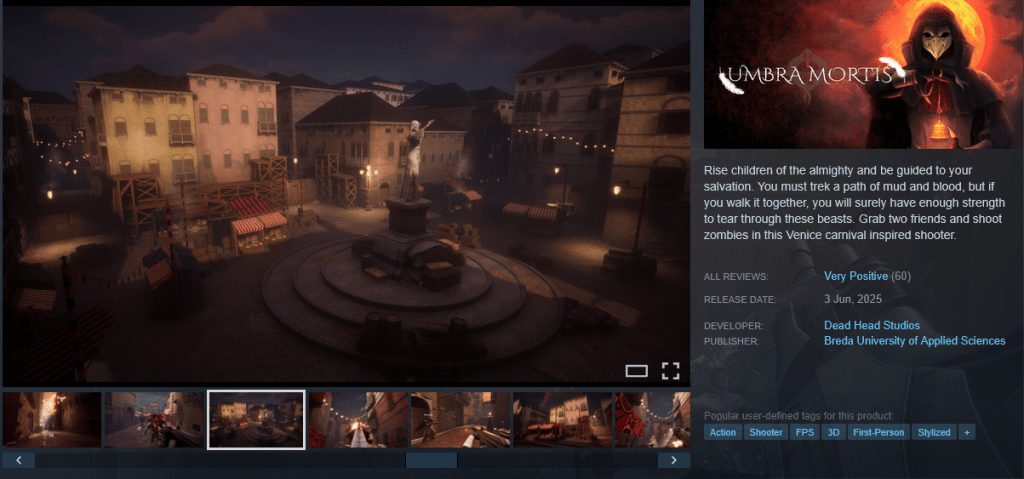
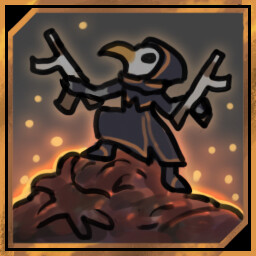
Umbra Mortis is a 3-player co-op game set in Venice.
Fight hordes of enemies and manage resources with your
friends to bring an end to the ongoing catastrophe.
The project was created during the third year of my studies
and it involved working with multiple disciplines
(programmers, artists and designers) over the course of 24 weeks.
I participated actively in Concepting and Pre-Production while
taking a step back in the final stages.
Published Platform:
Steam
Team size:
Total: 25
Engine:
Unreal Engine 5
Project Length:
24 weeks
Individual Role:
Level Designer
Role and Contribution
Level Designer
- Conducted genre and tag research during the concepting phase to help define the game’s market positioning
- Researched level design references for cathedral environments and zombie shooter mechanics to establish visual and gameplay direction
- Created multiple prototypes exploring both mechanical systems and thematic elements to test different approaches to gameplay feel and atmosphere
- Analyzed competitor titles and compiled a feature recommendation document focused on enhancing player experience
- Designed a gym level to test core mechanics and multiplayer interactions
Research
Genre Research
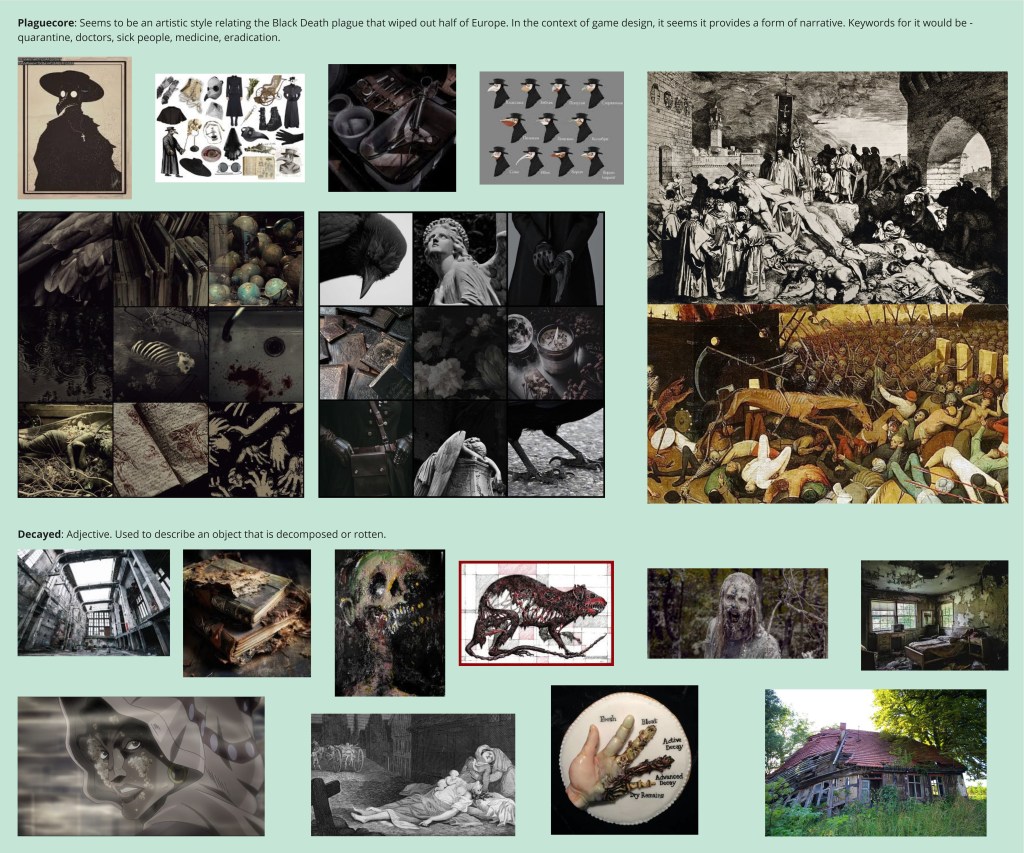
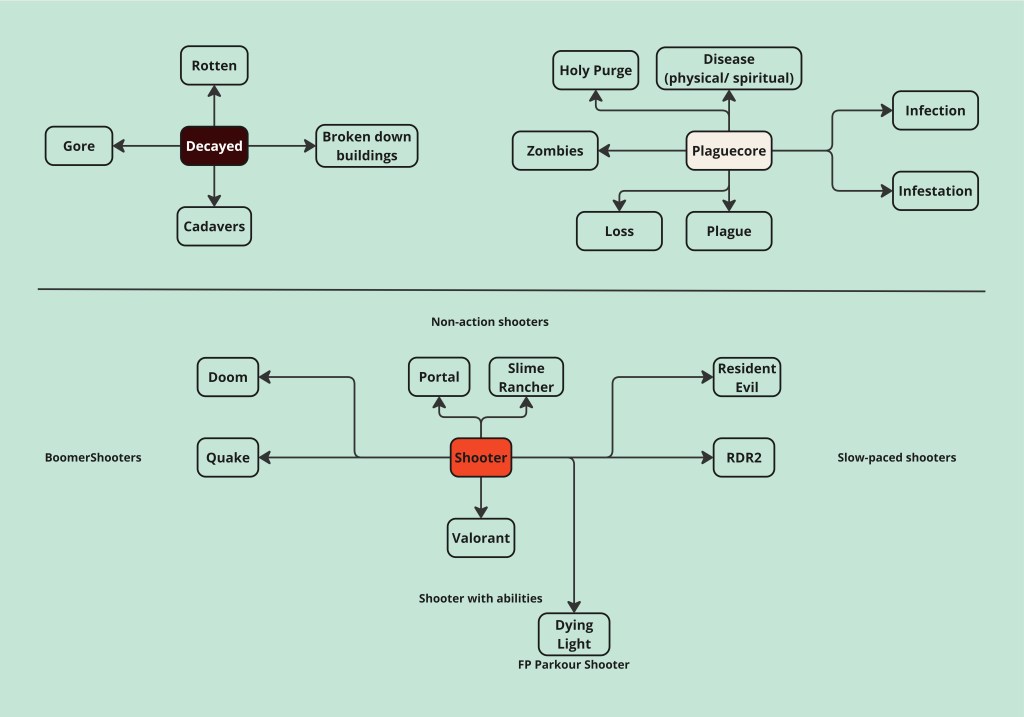
At project kickoff, we selected three defining tags that would guide our design constraints:
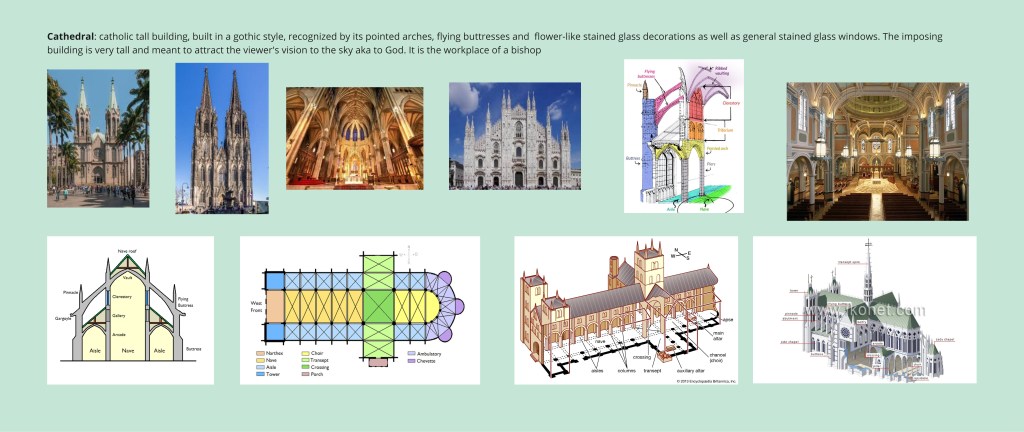
Cathedral, Past, and Decayed.
To accelerate the design team’s decision-making process, I created a mood board visualizing how these tags could translate into the game’s aesthetic, supported by a genre matrix identifying relevant reference titles.
I also researched cathedral architecture and design language to help the team understand the environmental possibilities and level design opportunities.
This research ultimately led us to anchor the game’s setting in Venice, drawing inspiration from the iconic San Marco cathedral.
Level Research

To understand zombie shooter design conventions, I conducted a detailed analysis of Kino der Toten, one of Call of Duty: Zombies’ most iconic maps. The research covered:
- Room-to-room progression and player flow patterns
- Cooperative mechanics and strategic dependencies between players
- How player goals shaped gameplay decisions and pacing
This analysis identified key design principles that directly informed our level design and co-op interaction systems.
Prototyping
Early in concepting, we established the game would be a shooter.
After analyzing our genre constraints and tags, I developed two prototypes exploring opposite ends of the design spectrum: a slow-paced, atmosphere-driven experience inspired by Resident Evil 4’s tension and resource management, and a high-mobility system featuring an Attack on Titan-inspired grappling hook paired with a heavy shotgun.
These prototypes helped the team evaluate different gameplay directions and identify which mechanics best served our vision.
Atmospheric Prototype:
This prototype explored zombie and decay themes through a Resident Evil-inspired lens. The project expanded my technical proficiency with Unreal Engine’s foliage, landscape, and volumetric fog systems—all critical for establishing the intended mood.
I used modular assets to construct an abandoned village and cathedral environment, while developing skills in thematic lighting design and performance optimization to maintain atmosphere without sacrificing frame rate.
Fast-Paced Prototype:
One week later, I developed a fast-paced prototype that pushed the opposite end of the design spectrum, expanding both my technical capabilities and the team’s conceptual possibilities.
The prototype prioritized speed, impact, and flashy mechanics—exploring how weapon weight could affect player momentum and enable skill-based movement combinations.
Inspired by Quake’s rocket-jumping techniques discovered by speedrunners, I implemented a system where well-timed actions could chain together for increased velocity, creating a high-skill ceiling for player movement.
Prototype Outcome: These contrasting prototypes reinforced my design philosophy: avoiding attachment to a single solution and actively pushing beyond familiar territory. By exploring vastly different gameplay styles, I demonstrated my commitment to pursuing the best player experience rather than defending initial ideas—a approach that strengthens both creative exploration and production outcomes.
GYM-level
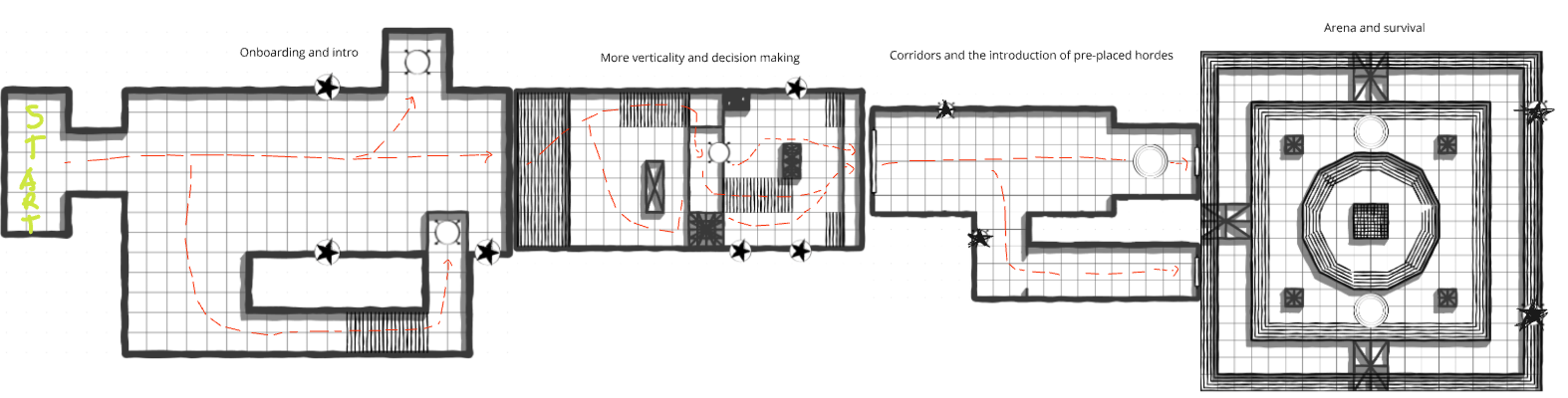
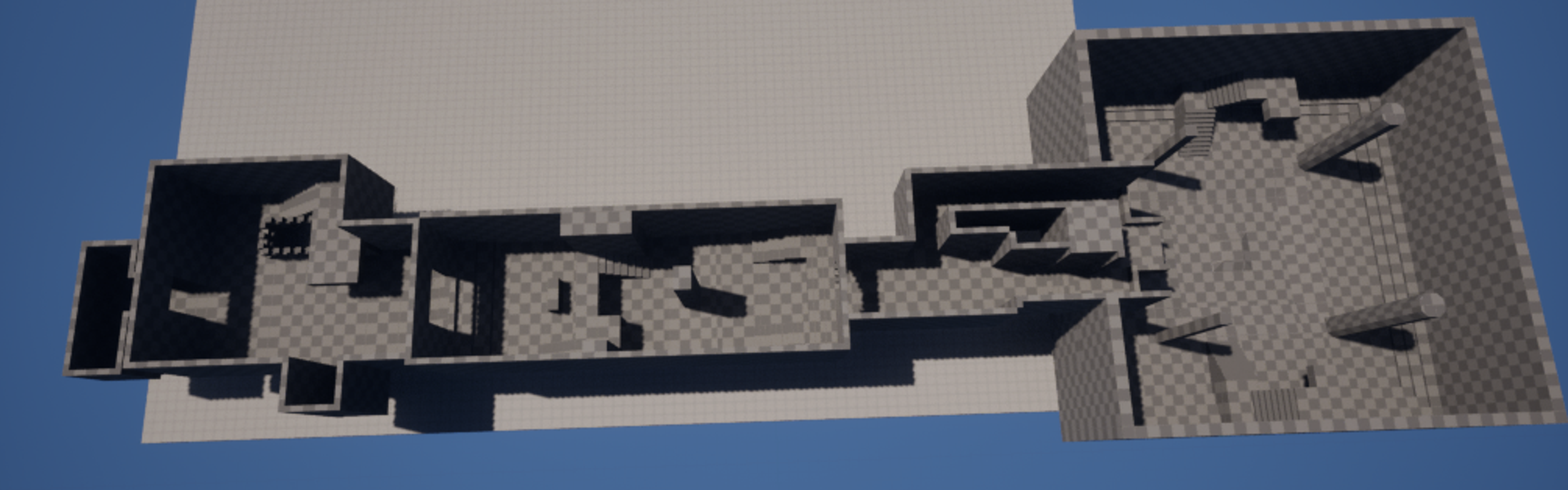
As we transitioned into pre-production with locked references, genre tags, and a confirmed multiplayer focus, the team needed a dedicated space to test core mechanics and cooperative level design elements.
I designed a GYM level that incorporated verticality and key environmental features identified in our research—including arena spaces and tight corridors—to validate gameplay systems and multiplayer interactions.
Several design elements from this testing environment were successful enough to carry into the final build, including the onboarding layout, arena structure, and the mechanic requiring all players to be present before progression triggers.
in-game work
Multiple level design elements and systems I developed during pre-production proved effective enough to be carried forward into the final game. My contributions to spatial layout, player flow logic, and cooperative interaction design established foundational patterns that the team continued to build upon throughout production.
I developed a player verification system ensuring all participants were ready before gameplay began. Initially implemented in the onboarding sequence, this feature was recognized as valuable enough to be adapted into the final game’s multiplayer lobby ready-up mechanic, extending its utility beyond the original design context.
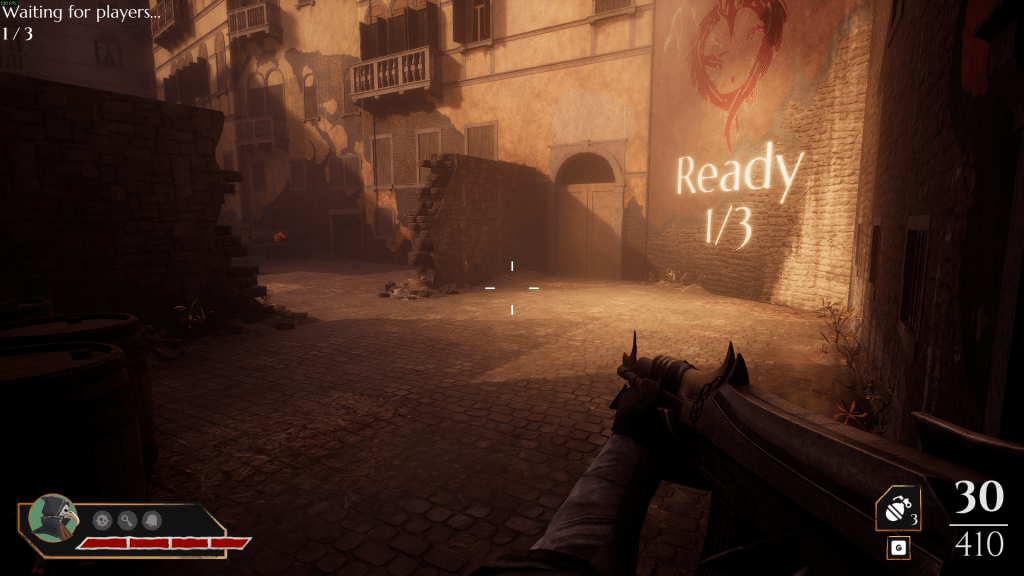
The opening onboarding section (bell pickup) uses scaffolding layouts and enemy spawner systems from my pre-production GYM level. The production team adapted these elements to teach players about horde mechanics, converting testing infrastructure into an effective tutorial experience.
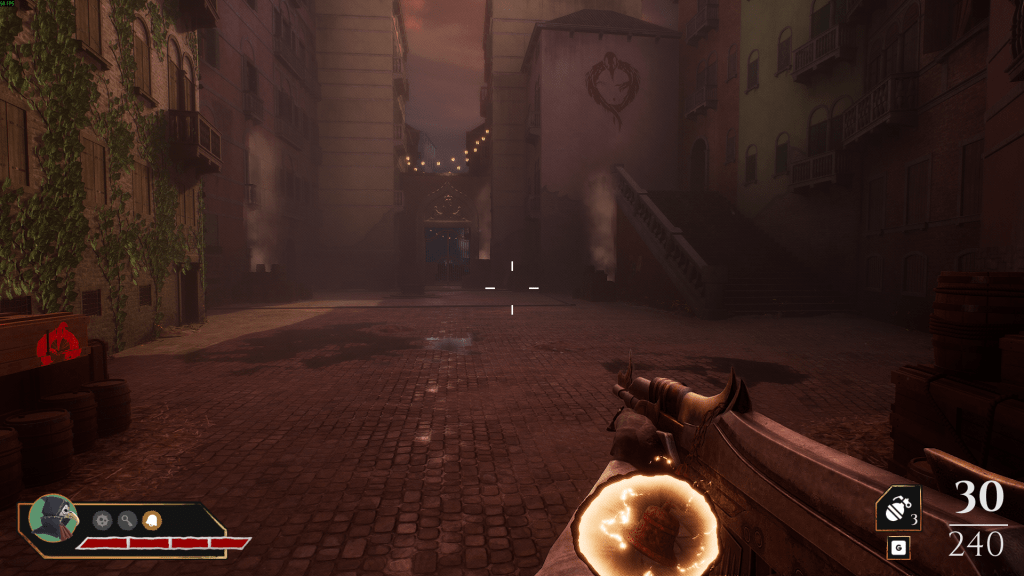
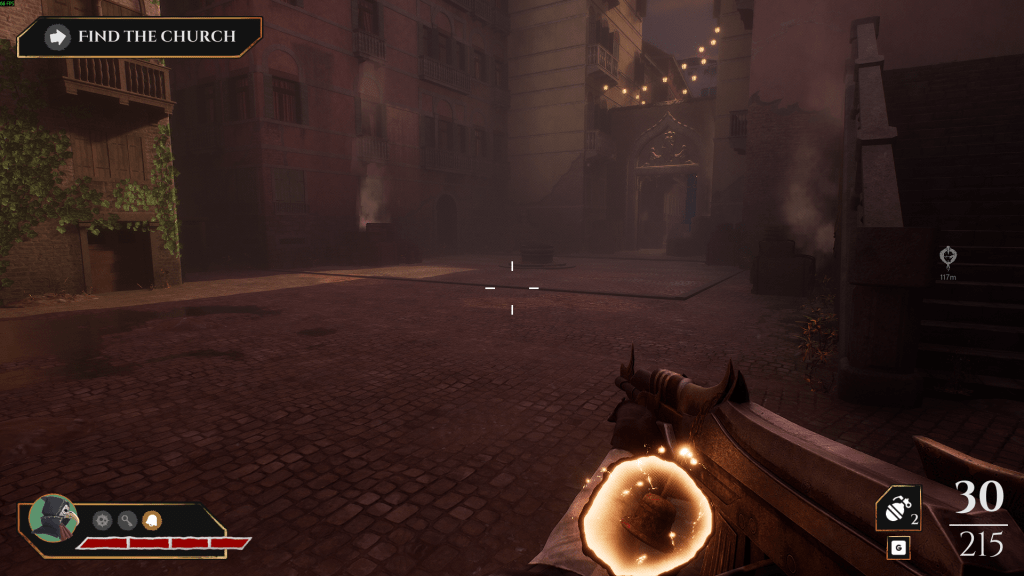
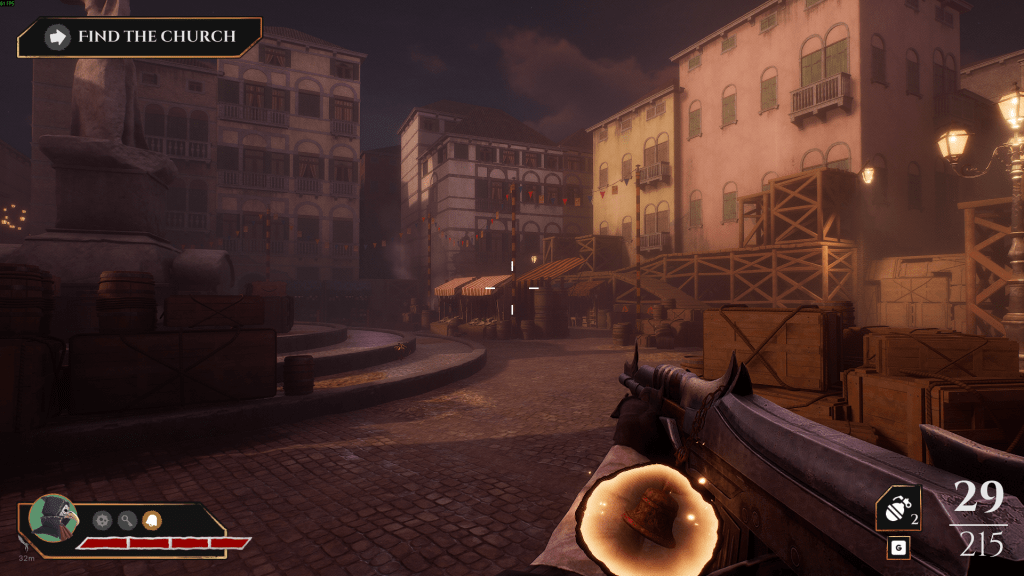
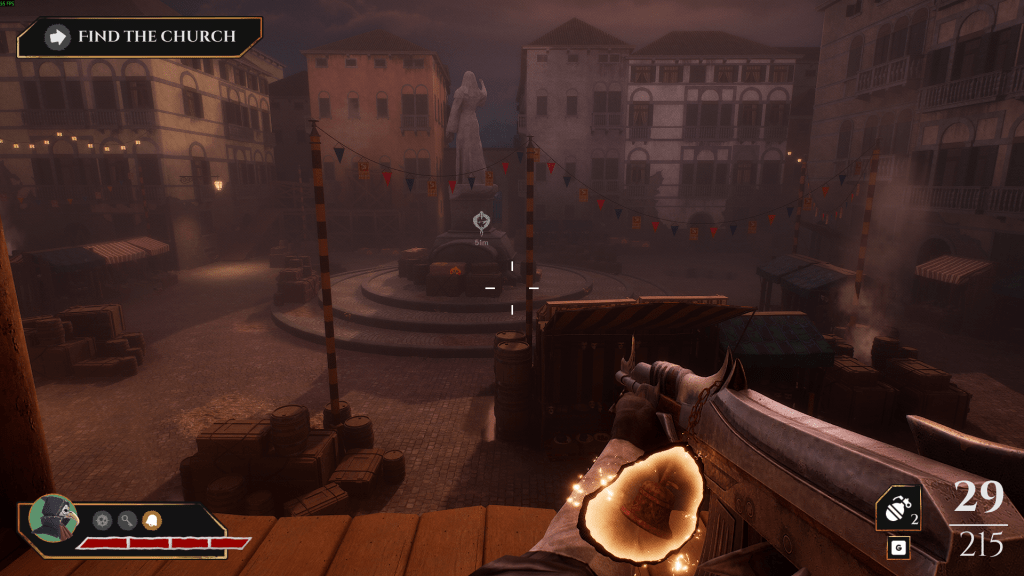
The arena survival section at the end of the first challenge, incorporates core design principles from my GYM level, including scaffolding structures that enable vertical gameplay and enemy leashing, along with concealed spawn points for dynamic enemy placement.
The final implementation maintains key elements from my original design: a central landmark that encourages player circulation and symmetrical obstacles that disrupt flow while providing tactical leashing opportunities.
Conclusion
Umbra Mortis marked my first experience designing within the zombie-shooter genre. My previous projects—Marisol, a third-person casual game built from scratch, and a custom Quake map as a modding exercise—hadn’t prepared me for this specific design space, making the research and prototyping phase crucial to my contributions.
This project taught me the value of approaching unfamiliar genres with a player-first perspective. Diving into new research without preconceptions allowed me to identify which elements genuinely shaped player experience rather than relying on assumed genre conventions.
Working within a 25-person team also provided essential lessons in cross-discipline collaboration, managing dependencies, and maintaining clear communication across departments.
The concepting and pre-production phases were both creatively fulfilling and professionally formative, demonstrating how rigorous early-phase work establishes the foundation for successful production.
 Gabriela Besleaga - Level Designer