Marisol began as an art project where the visual artists came up with the theme and the looks of the game over the course of 8 weeks.
The designers and programmers joined the project later and we added gameplay that enhanced the experience and primarily allowed the player to enjoy the beautiful looks and work of our artists.
Thus, Marisol is a beginner-friendly, first-adventure kind of game that is meant to feel like a stroll. Its challenge comes from puzzles and crab-enemies that create low-intensity obstacles.
Published Platform:
Itch.io
Team size:
Total: 23
Engine:
Unreal Engine 5
Project Length:
8 weeks
Individual Role:
Level Designer
Role and Contribution
Level Designer
- Researched target games and gathered reference materials to guide layout direction.
- Sketched level concepts, room ideas, and overall flow before moving into blockout.
- Built blockouts to test space sizes, pacing, and guidance for the player.
- Designed room encounters and puzzles with the story and player experience in mind.
- Worked with the programmers to set up puzzle logic using the puzzle tool.
- Playtested regularly and adjusted layouts and encounters based on feedback.
- Communicated with the team to keep production moving smoothly and avoid bottlenecks.
Research
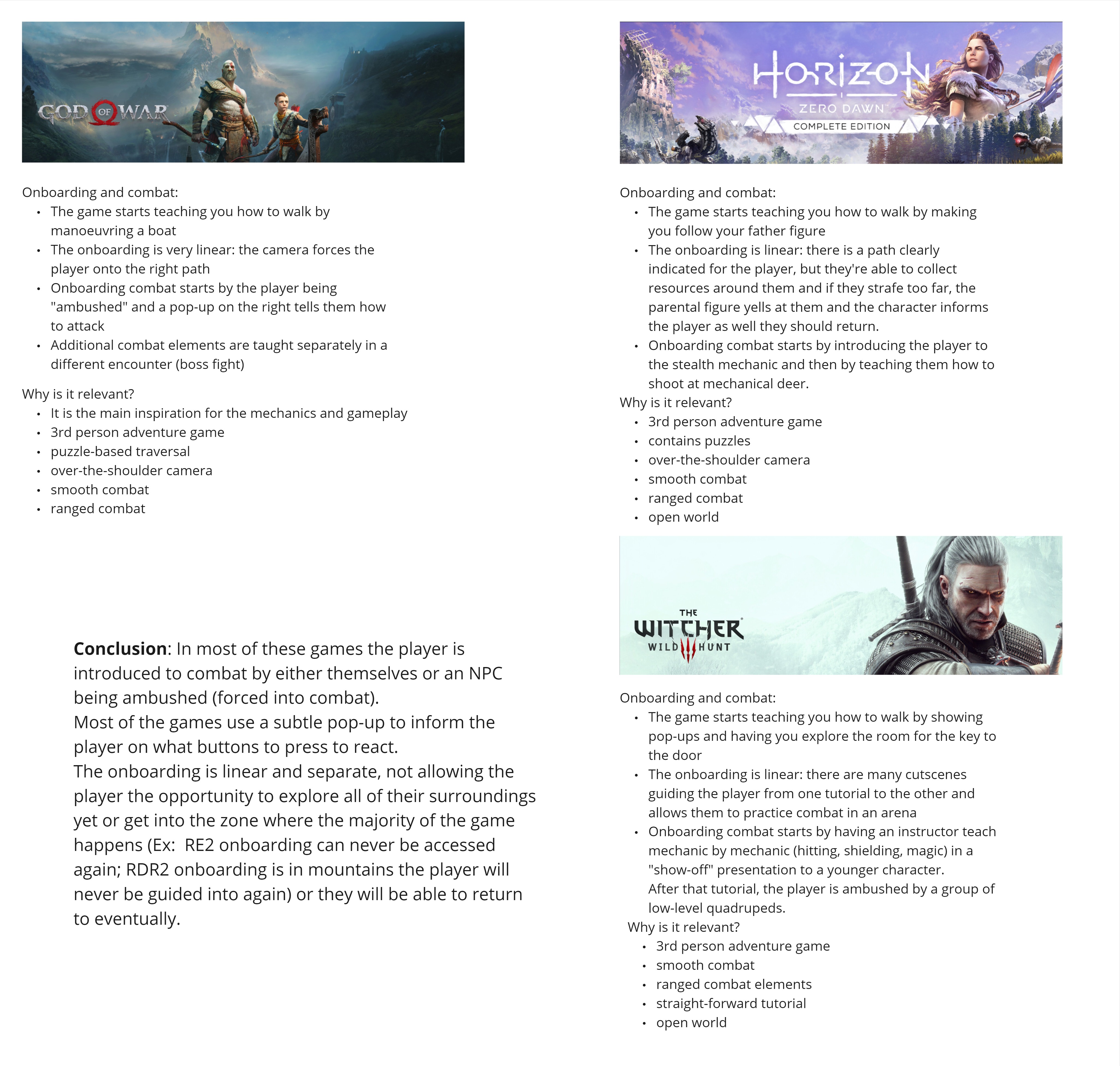
With the genre established, I researched progression systems and level layouts from popular titles in the space, focusing particularly on their onboarding sequences and first levels.
- I looked at popular titles in the space, paying close attention to their opening levels and how they brought players into the experience.
- I chose these games carefully, making sure each one was relevant to what we were trying to achieve and who we were designing for.
- I took notes on how each game introduced difficulty, paced their tutorials, and eased players into puzzles.
- I took what I learned and applied it to our own room and level concepts, aiming to create something that felt natural and welcoming.
Sketching and Concept
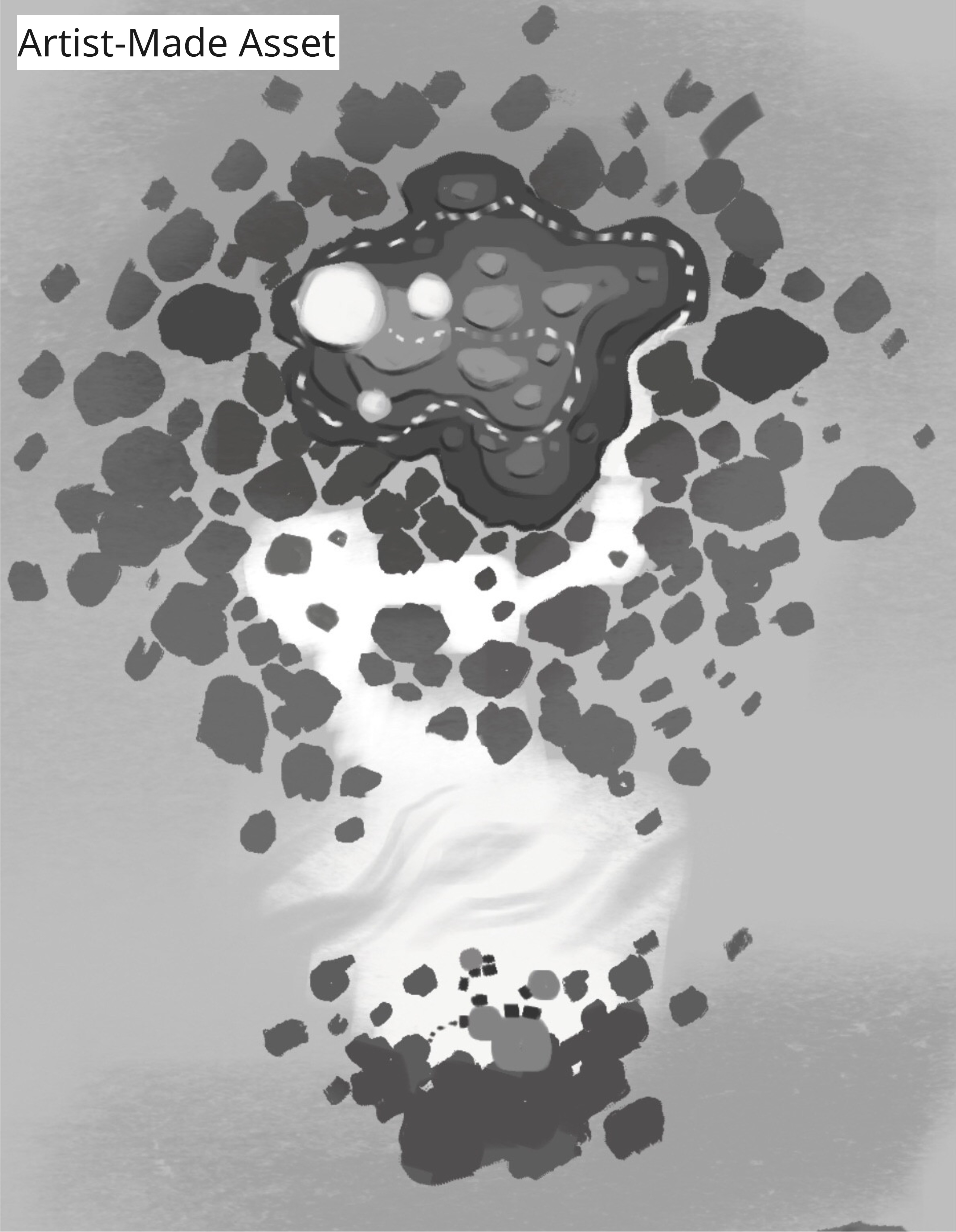
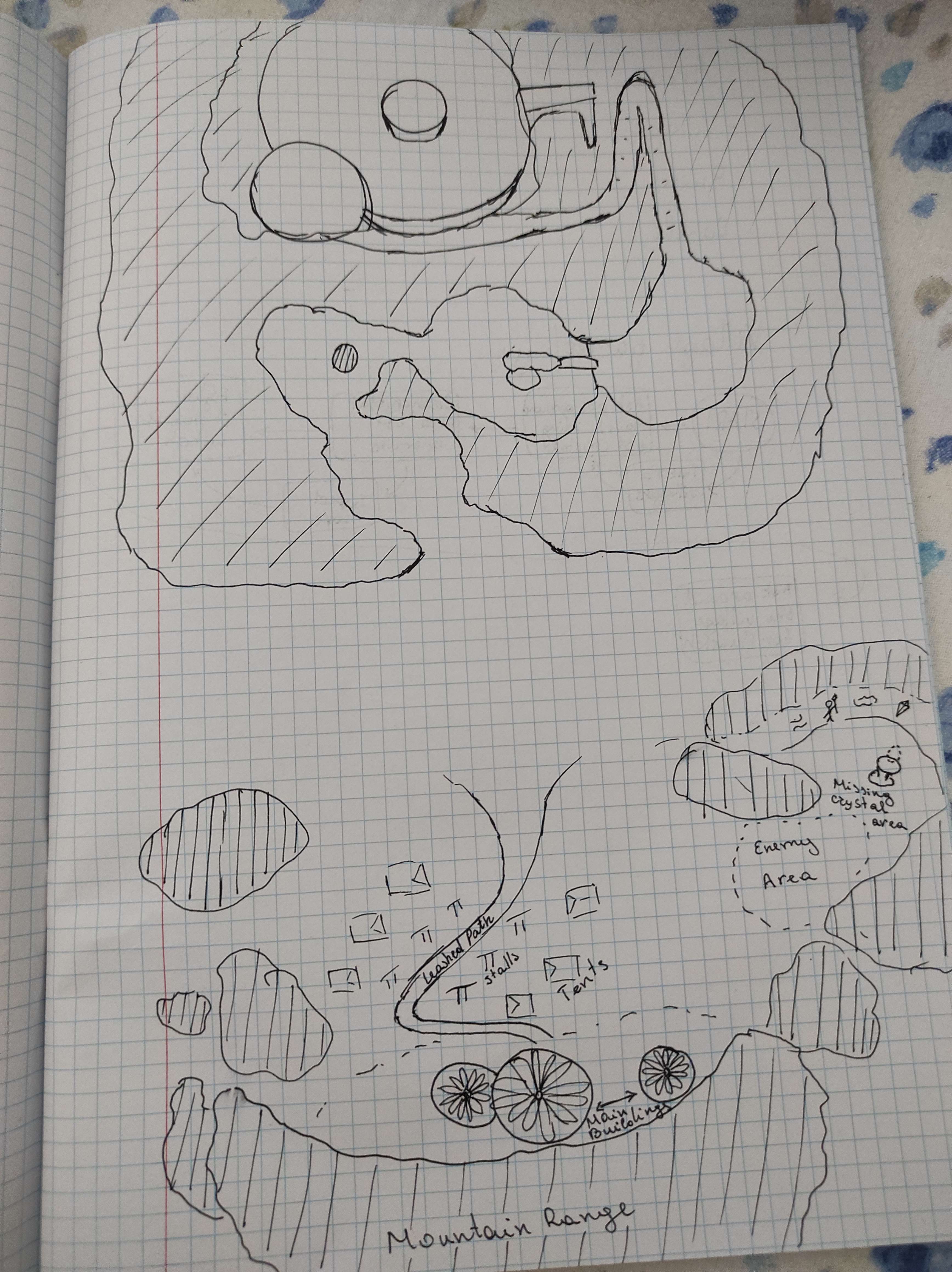
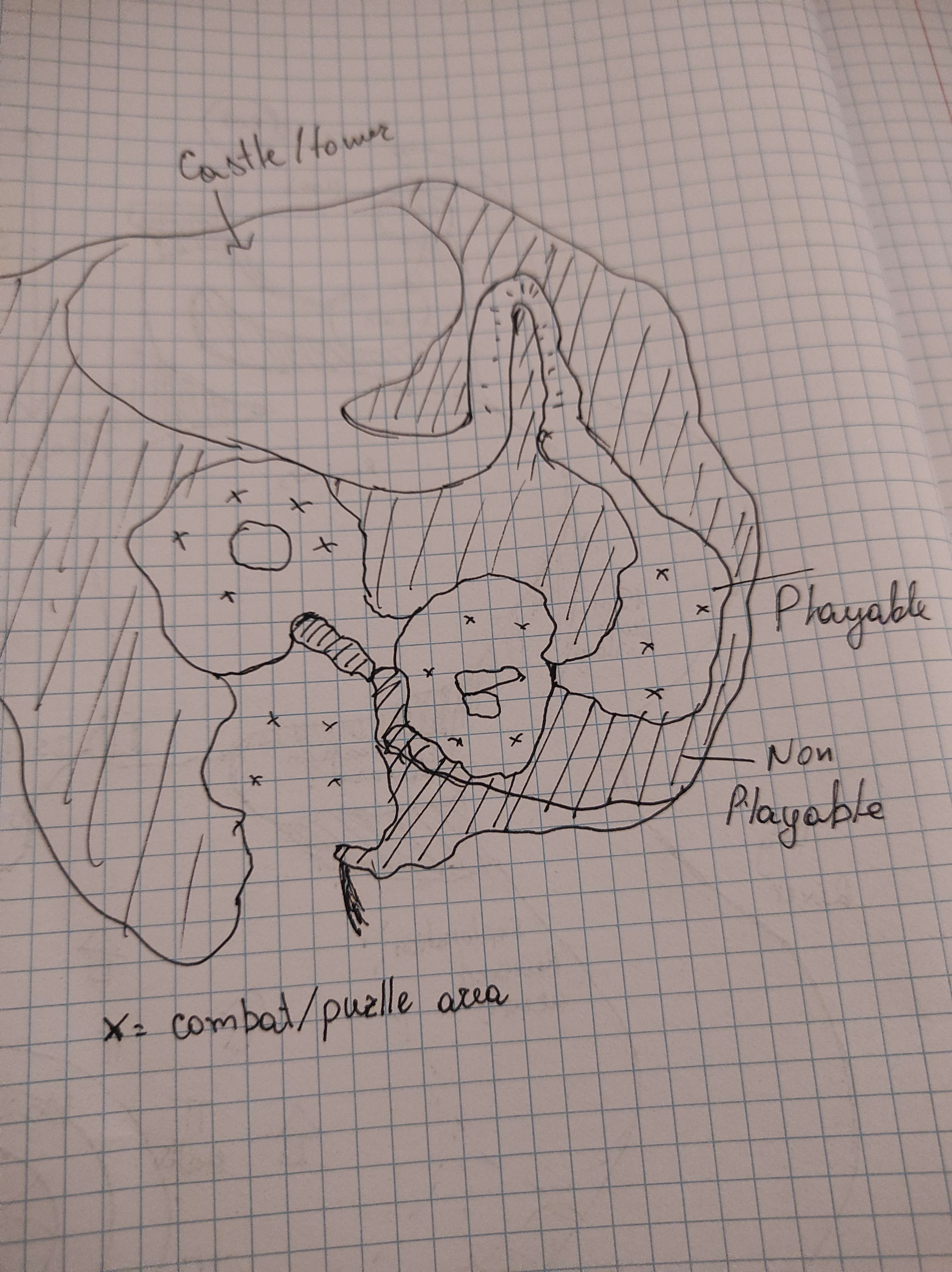
After getting an idea for gameplay and as well as by utilizing an artist-brought concept for world building, I began sketching the world.
When sketching I kept in mind:
- Scope
- Opportunities for beats
- Narrative elements
- Key moments
The team vision aligned quickly and we determined we wanted a set of dangerous ruins that led up to a boss fight.
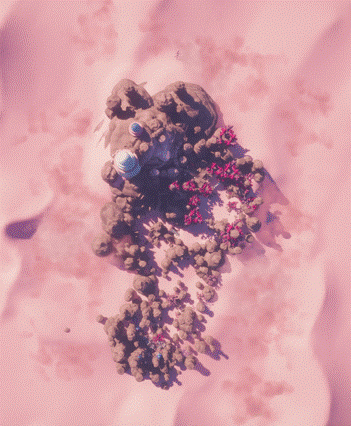
Beats design and protoyping
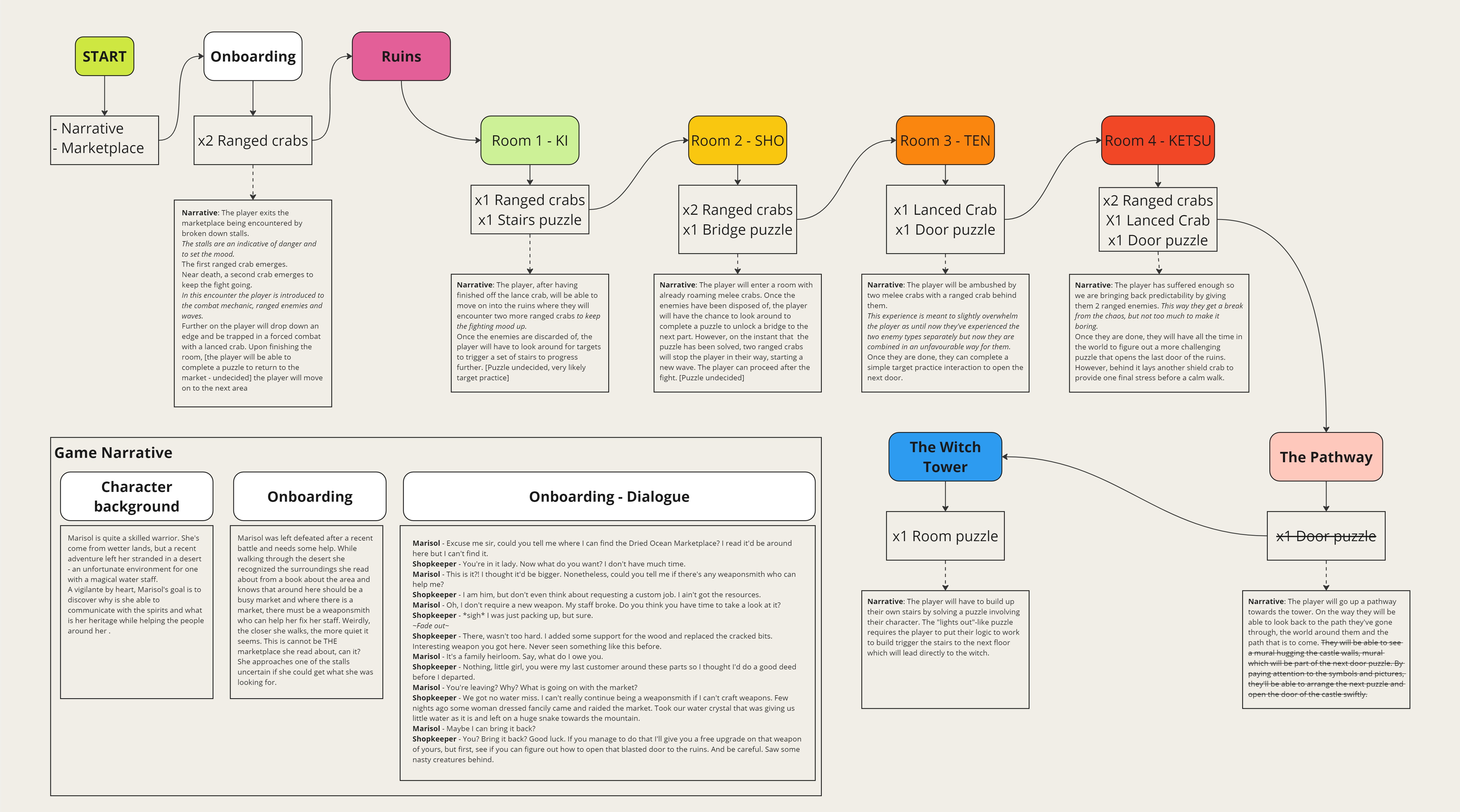
I structured the game’s pacing using the KI-SHO-TEN-KETSU framework—a narrative approach that builds introduction, development, twist, and conclusion. This allowed me to create an engaging difficulty curve with clear escalation, ensuring each level felt purposeful while building toward the final boss encounter.
Combat
I worked closely with the AI designer to understand our enemies’ capabilities and development progress. Using this information, I estimated how long players would spend in combat with each enemy type, then began placing them throughout the levels. Once the encounters were in place, I monitored the balance between our design intent and the actual player experience, adjusting placements as the level design evolved.
For a beginner-friendly game, I prioritized clarity and straightforward encounters. Enemies are highly visible and engage players head-on, keeping combat approachable rather than punishing.
The challenge and strategic thinking come from the puzzles instead, allowing new players to build confidence through combat while exercising problem-solving skills elsewhere.
Puzzles
I designed puzzles to encourage environmental awareness, prompting players to explore and interact with the world around them.
This approach aligned perfectly with our visual-focused USP.
The puzzles increased in difficulty as players progressed, but always built on established mechanics—presenting familiar systems under new rules or in different contexts rather than introducing entirely new concepts.
Blockout
I built my blockouts in Unreal Engine’s modeling mode, testing room sizes, camera perspectives, and how long players would spend in each area. This stage was all about making sure the spaces felt right before committing to final art.
Once the blockout was solid, I worked with the artists to begin set-dressing and fine-tuning enemy encounters. This is when the game really came to life—suddenly we weren’t just imagining how it would play, we were actually playing it. All the pieces I’d been working on separately—puzzles, combat encounters, story beats—finally merged together into a cohesive experience.
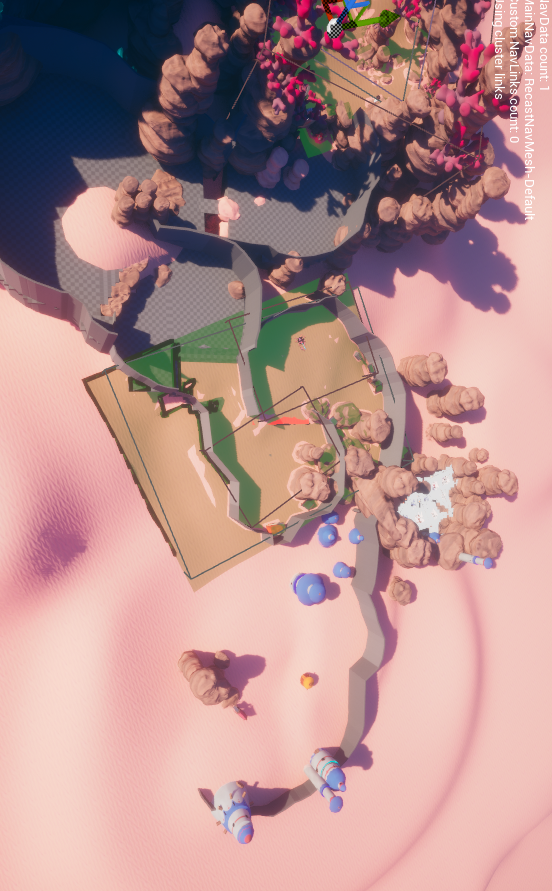
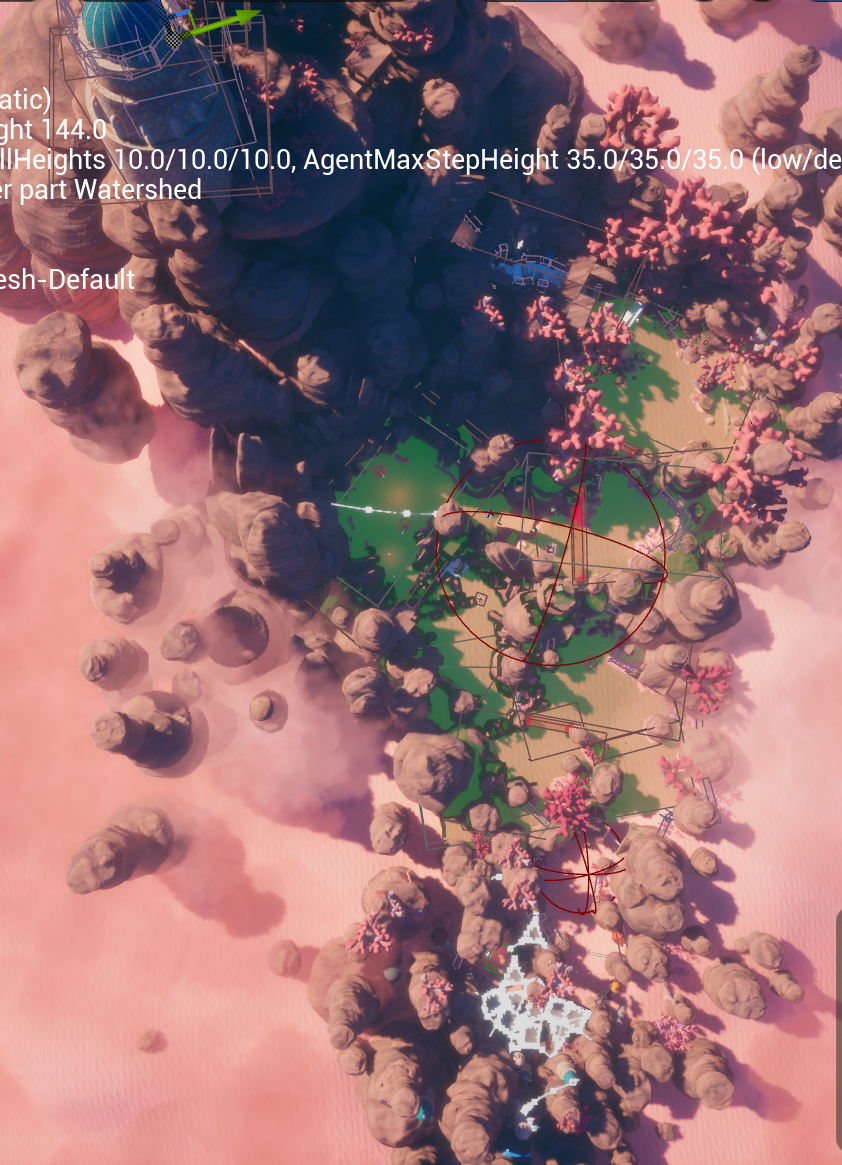
Playtesting and Iterative Process
I conducted multiple playtesting sessions throughout development, documenting feedback and tracking iterations in detailed logs.
Rather than relying on assumptions, I watched how players actually navigated the levels, where they got stuck, and what felt intuitive versus confusing.
Several key adjustments that came out of the playtests were:
- Creating Coral gates to layer combat and stop players from running away from combat.
- Creating VFX to bring attention to levers and points of interest.
- Splitting enemies’ attacks in half to allow for a smoother onboarding to their abilities.
Each iteration brought the experience closer to our design goals while respecting what players were actually telling us through their actions.
Extra
This project gave me the chance to step beyond pure level design and contribute across multiple disciplines.
I handled narrative design for key moments, creating the story that tied our gameplay together. I suggested the instructing NPC be a blacksmith and developed the lore around that role, then wrote his dialogue to establish why players were embarking on this journey. I also conceived the witch’s motivation—she stole the land’s water to open a spa—and wrote the cutscene dialogue that revealed this twist. These narrative choices gave the game a clear sense of purpose and direction.
I also implemented the onboarding tutorial UI, covering shooting mechanics, NPC interactions, and combat basics. We needed a tutorial system and I stepped up to build it, which also helped me refine the level flow and ensure the pacing felt right from the player’s first moments.
Conclusion
Working with a larger team while being one of just a few designers was both challenging and eye-opening. We were ambitious—maybe a little too ambitious—and learned the hard way that you need to match your scope to what your team can actually handle, especially when planning time is tight.
The biggest lesson? Good collaboration isn’t just about working together—it’s about clear communication, solid leadership, and making sure everyone’s on the same page about where the project is heading. When things got tough, we didn’t just power through. We looked at what we were struggling with as developers and actively worked on getting better.
For me personally, the most valuable part was learning to work closely with artists, animators, and programmers. I got much better at adapting my designs to fit their workflows and understanding their constraints. That experience has made every project since then run more smoothly, and honestly, it’s made me a better designer.
 Gabriela Besleaga - Level Designer